
Resources · Daily routines
Making mornings easier: small ideas for families
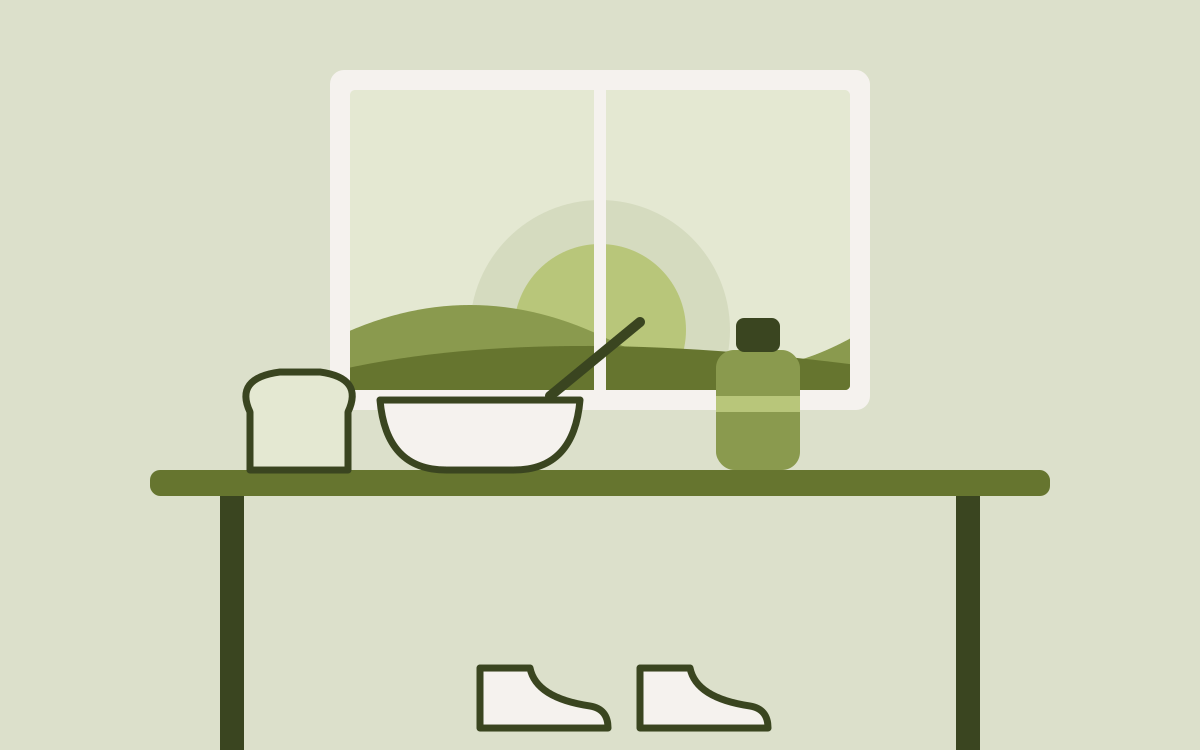
Shoes that can’t be found, a jumper that feels wrong, one more request for breakfast, and the clock ticking. When families talk to me about the hardest parts of their day, mornings come up a lot.
How I look at a morning
As an occupational therapist, I spend a lot of time thinking about everyday routines. To an adult, getting ready is one job. To a child, it’s a long string of small steps: remembering what comes next, doing up buttons, coping with how clothes feel, and stopping something fun to start something else. All of that, usually with someone saying “hurry up”.
So when a morning falls apart, I try to ask which step got stuck, and not what’s wrong with the child or the parent. Here are some ideas to try. Take what suits your family and leave the rest.
Start the night before
- Lay out clothes together.
- Pack the school bag and put it by the door.
- Keep shoes, hats and drink bottles in the same place every day.
Show the steps
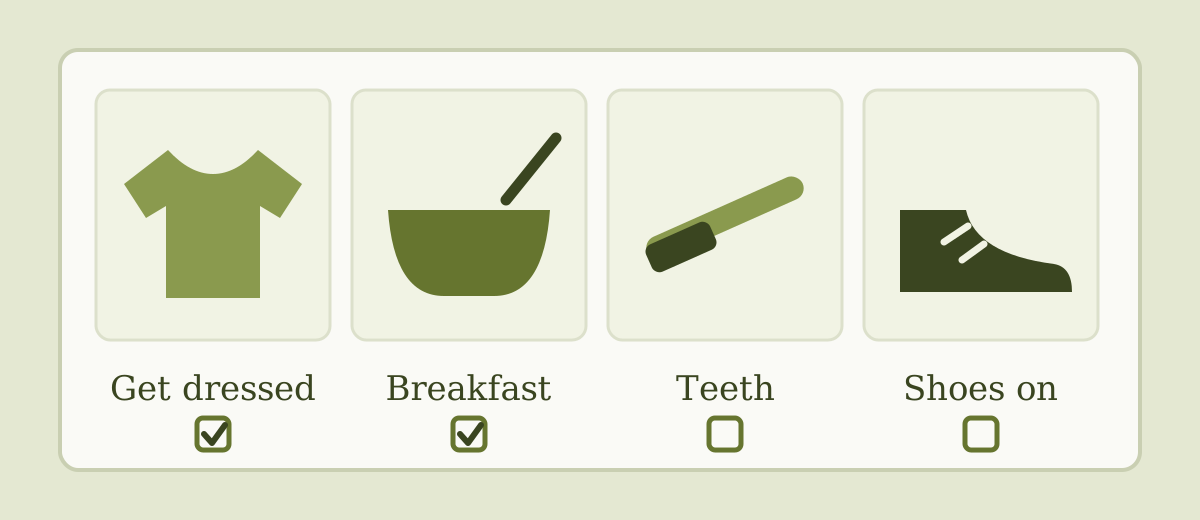
A simple picture chart on the wall or the bathroom door is one idea. Draw it with your child, or take photos of them doing each step, and tick steps off as you go. A review of the research on visual activity schedules for autistic people judged them strong enough to count as an evidence-based practice [1]. I haven’t found the same evidence for other children, so treat this as an idea to try. I’d keep it short, with four or five steps.
Give a little more time
If you can, plan extra time for the part of the morning that takes longest.
Think about the senses
If something causes a fight every day, such as tags, seams, socks, a loud radio or bright lights, I’d ask what your child is noticing. Sensory differences are commonly reported by parents of autistic children [2]. Whatever the reason, soft clothes, a quieter room or a slower start might be worth a try.
Choices, not orders
Offering two choices (“Do you want the blue socks or the grey?”) is a small way to give children a say. A meta-analysis of 41 studies found that giving people choice was linked with more intrinsic motivation, effort and task performance, with larger effects in children than adults [3].
Be kind to yourself
There will still be hard mornings. That’s part of family life, and it isn’t a measure of how you’re doing as a parent. If mornings feel very hard for a long time, you’re welcome to talk to me about it. You don’t need a diagnosis or a referral.
References
- Knight V, Sartini E, Spriggs AD (2015). Evaluating visual activity schedules as evidence-based practice for individuals with autism spectrum disorders. Journal of Autism and Developmental Disorders, 45(1), 157–178
- Tomchek SD, Dunn W (2007). Sensory processing in children with and without autism: a comparative study using the Short Sensory Profile. American Journal of Occupational Therapy, 61(2), 190–200
- Patall EA, Cooper H, Robinson JC (2008). The effects of choice on intrinsic motivation and related outcomes: a meta-analysis of research findings. Psychological Bulletin, 134(2), 270–300
This article is general information. It is not advice about your own child. Talk to your GP or another health professional about any health concern.