
Resources · Senses
Stimming and self-soothing: what it is and how to support it
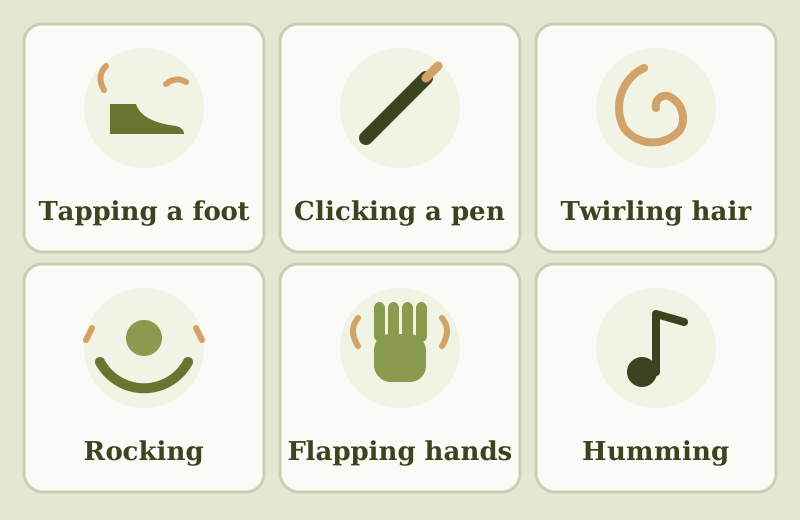
If someone has commented on your child’s rocking or humming, you may have started to worry about it. So let’s start with something you may have noticed in yourself: you might jiggle a leg in a long meeting or click a pen when you’re thinking. Repeating a movement to feel steadier is a very human thing to do.
What stimming is
“Stimming” is short for self-stimulatory behaviour. It’s often talked about in relation to autistic people. In one interview study, autistic adults described stimming as a way to soothe themselves and to express strong feelings or thoughts [1]. It can involve moving, making sounds, or seeking something to look at, touch or smell.
Why people do it
The autistic adults in that study described stimming as having a job to do, such as helping them settle when things felt like too much [1]. That study asked adults, not children, so your child’s reasons may differ. These are things worth watching for just before a stim:
- Too much noise, light, touch or information
- Stress, worry or big feelings
- Busy social situations
Does it need to stop?
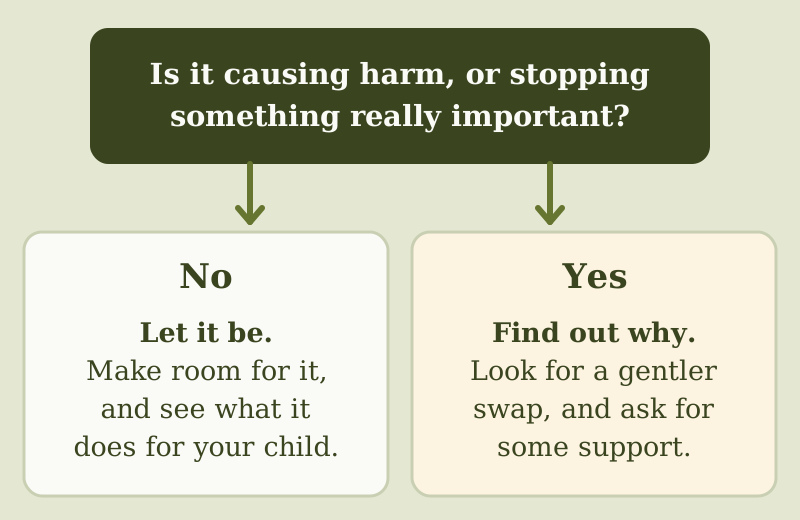
Often not. The autistic adults in that study said they did not want stimming stopped, said that holding it in added to their distress, and described a lack of social acceptance [1]. It was a study of adults, so I treat it as a guide and not a rule. Here is the question I find most useful.
Ways to support your child
These are practical ideas and not tested treatments.
- Watch what happens just before. A short diary over a few weeks can show patterns.
- Change the setting where you can, with quieter spaces, dimmer lights or headphones.
- Make a place at home where your child can stim freely.
- Keep a fidget or something soft in the school bag.
- Share what helps with teachers and family, so your child isn’t told to stop.
| Instead of | You could try |
|---|---|
| “Quiet hands.” | Saying nothing, if it isn’t causing a problem |
| “Stop that, people are looking.” | “Do you need a break, or something to hold?” |
| Taking away a favourite fidget as a consequence | Keeping it available, because it may help your child cope |
If a stim is hurting your child
Biting a hand or banging their head can have many reasons. Stay calm, keep your child from getting hurt, and try to work out what’s behind it. A professional who knows your child can help you find what might suit them, because what helps one child may not help another.
You can talk to your GP, your child’s teacher or an occupational therapist. These behaviours aren’t your fault or your child’s. You don’t need a diagnosis to contact me.
References
This article is general information. It is not advice about your own child. Talk to your GP or another health professional about any health concern.